
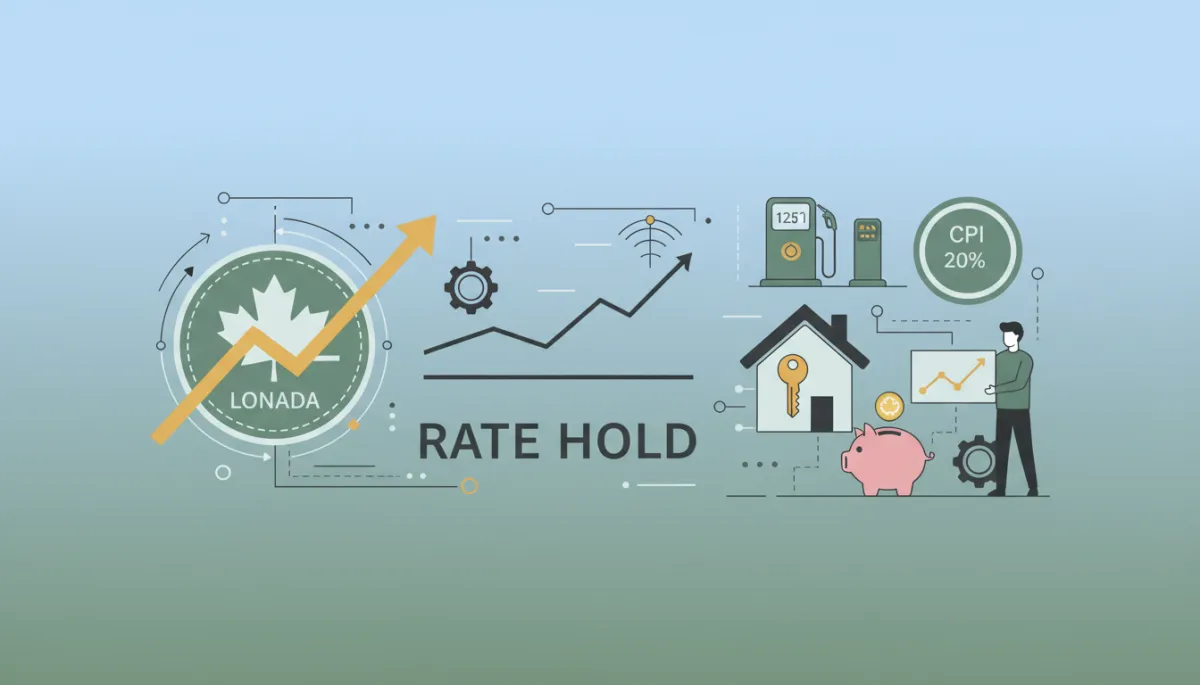
Bank of Canada Rate Hold: Impact on GTA Housing
Real Estate, Bank of Canada Rate, GTA Housing Market
What the Bank of Canada’s July 15, 2026 Rate Hold Means for GTA Home Buyers and Sellers
The Bank of Canada has held its overnight rate at 2.25% for the sixth meeting in a row. For buyers, sellers, and homeowners in the Greater Toronto Area, this stability is more than a headline—it’s the backdrop for every mortgage decision, offer strategy, and long‑term housing plan for the rest of 2026.
The July 15, 2026 Decision: Sixth Straight Hold at 2.25%
On July 15, 2026, the Bank of Canada (BoC) once again kept its target for the overnight rate at 2.25%, with the Bank Rate at 2.50% and the deposit rate at 2.20% (Bank of Canada). This marked the sixth consecutive decision to leave rates unchanged, continuing a pattern that began earlier in the year after a series of rate cuts designed to support a slowing economy.
For everyday Canadians—especially first‑time buyers and budget‑conscious families across the Greater Toronto Area—this is not just a technical policy move. It’s a clear signal that the era of rate cuts is effectively over for now and that we’ve entered a period of rate stability. That stability is exactly what the Affordable Homes and Condos - Ali Bolourchi Real Estate (A.B.R.E.) Team focuses on turning into real, practical guidance for clients deciding whether to buy, sell, or stay put.
From Rate Cuts to Stability: Why This Looks Like the End of the Easing Cycle
Over the last couple of years, the Bank of Canada shifted from aggressively raising rates to tame high inflation, to gradually cutting them as growth slowed and inflation eased. By mid‑2026, however, the picture had changed:
The economy had moved from near‑stagnation to a modest rebound, with real GDP growth in Q2 2026 estimated around 0.8% quarter‑over‑quarter and annual growth for 2026 projected between 0.7% and 1.1% by most forecasters (BoC, Department of Finance).
Inflation was no longer spiralling. While headline CPI was still above the 2% target, core inflation (excluding volatile items like gasoline) was close to 2% in May 2026, suggesting underlying price pressures were contained.
Against this backdrop, the Bank judged that further cuts could risk overheating certain parts of the economy—especially housing—without being necessary to keep inflation on track. By holding at 2.25% for the sixth time, the BoC is effectively telling markets: “We’ve done the cutting we needed to do. Now we watch, not rush.”
For GTA buyers and sellers, this is key. It suggests that, barring a major shock, we are unlikely to see meaningful rate cuts—or hikes—through the rest of 2026. That creates a predictable lending environment, which is exactly what cautious first‑time buyers and budget‑focused homeowners have been hoping for.
Inflation, Gasoline Prices, and the CPI: Why the Bank Didn’t Hike Instead
If you’ve filled up your car lately, you already know one of the biggest inflation stories in Canada: gasoline prices. In May 2026, headline CPI inflation rose to about 3.2%, and the Bank of Canada made it clear that much of this increase was driven by higher energy prices linked to conflict in the Middle East (BoC July 15 press release).
As we moved into the late summer, this trend continued. By August 2026, year‑over‑year inflation sat at 3.0%, unchanged from July, while gasoline prices were up a striking 22.8% compared to a year earlier (down from 25.7% in July) (Statistics Canada). Excluding gasoline, inflation was a more moderate 2.4%, only slightly above target.
In other words, the BoC is looking past temporary spikes in energy costs and focusing on the underlying trend. Raising rates aggressively to fight gasoline‑driven inflation would risk slowing the broader economy and putting unnecessary pressure on households—especially those already stretching to afford mortgages in markets like the GTA.
💡 Key Insight for Home Buyers: The Bank of Canada is signaling that while your gas bill may be unpredictable, your mortgage rate is not likely to jump suddenly in 2026. That separation between volatile energy prices and stable borrowing costs is crucial for planning your home purchase.
The Broader Economic Context: Modest Growth, Soft Labour Market, and Key Risks
The July 15 decision doesn’t exist in a vacuum. It reflects a careful balancing act between supporting growth and controlling inflation. Here’s the bigger picture the Bank is seeing—and that buyers and sellers should understand:
Growth: Slow but Healing
After a sluggish period, Canada’s economy began to regain momentum in mid‑2026. The Bank of Canada’s July Monetary Policy Report projected real GDP growth of around 0.7–1.1% in 2026, rising to roughly 1.5–1.9% in 2027 (BoC, TD Economics). Q2 2026 GDP grew by about 0.8%, supported by exports, household spending, and business investment.
Unemployment: Elevated but Gradually Easing
The labour market has cooled from the ultra‑tight conditions of the early 2020s. Private‑sector forecasters and the Department of Finance expect the unemployment rate to average around 6.5% in 2026, easing to roughly 6.2% in 2027 and close to 6% by the end of the decade (Department of Finance).
For households in the GTA, this means job opportunities are still present but not booming. Wage growth is moderate, and many families remain cautious about taking on large new debts. That caution is exactly why predictable borrowing costs are so valuable right now.
Key Risk Factors: Trade and Oil Prices
The Bank’s Governing Council has also been transparent about the risks that could change the outlook:
Trade relations with the U.S. – Ongoing uncertainty around trade policy and cross‑border supply chains could weigh on exports and business confidence. A deterioration here could slow growth and eventually push the Bank to consider future cuts—but not in the near term.
Oil and energy prices. – The Middle East conflict has already driven up gasoline prices. A further spike in oil could push headline inflation higher again, but as long as core inflation stays contained, the Bank is likely to “look through” these shocks rather than respond with aggressive hikes.
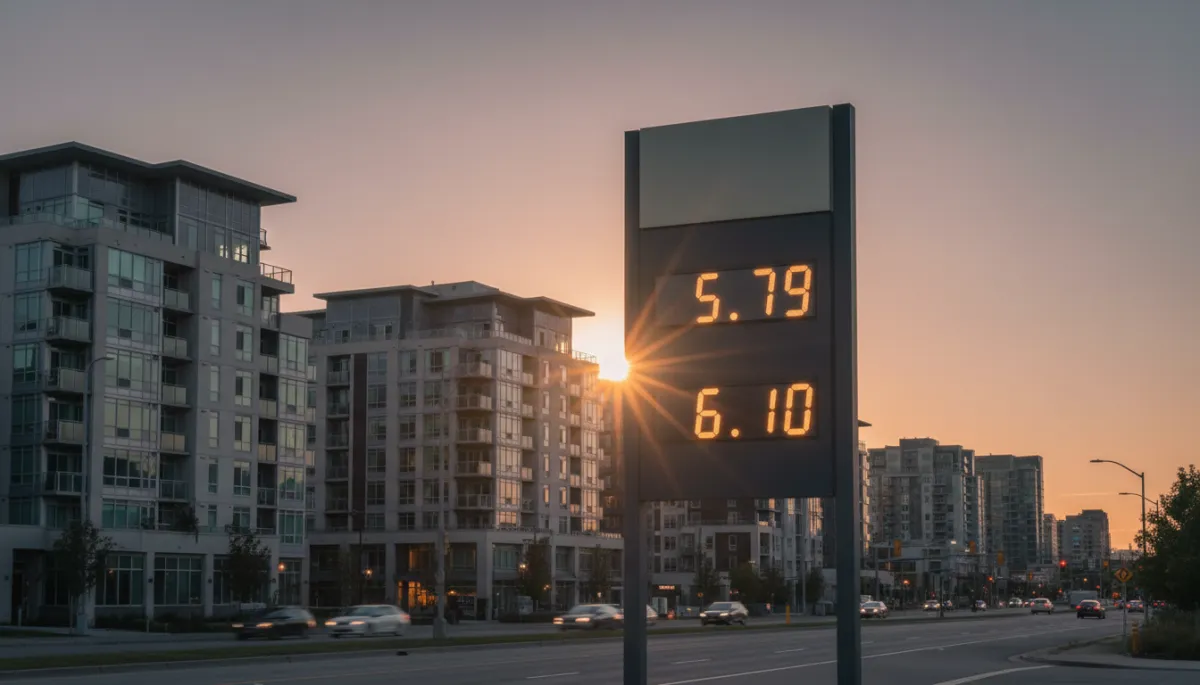
Volatile gasoline prices are lifting inflation, but mortgage rates remain comparatively steady in 2026.
A Predictable Lending Environment for the Rest of 2026
With six straight holds at 2.25% and inflation on a slow glide path back toward 2%, the Bank of Canada has effectively set the stage for a stable rate environment through the remainder of 2026. For the housing market, especially in high‑priced regions like the GTA, this predictability is powerful:
Lenders can price fixed‑rate mortgages with more confidence, reducing the risk of sudden spikes in quoted rates week to week.
Variable‑rate borrowers are less likely to see their payments change dramatically before year‑end, easing stress‑test concerns and monthly budgeting.
Buyers and sellers can plan with a reasonable assumption that today’s borrowing conditions will still look similar in three to six months, barring a major global shock.
📌 Key Takeaway: Rate stability does not mean “cheap money,” but it does mean fewer surprises. For many GTA families, that predictability is exactly what they need to move from “thinking about buying” to actually making an offer.
What This Means for You: Buyers, Sellers, Homeowners, and Investors
First-Time Buyers and Affordable Home Seekers
For first‑time buyers—the core focus of the Affordable Homes and Condos - Ali Bolourchi Real Estate (A.B.R.E.) Team—stable rates are an opportunity to plan carefully and act strategically:
You can run affordability calculations today and know that the stress‑test rate and likely mortgage offers you see are unlikely to change dramatically before year‑end.
You have time to compare fixed vs. variable options without fearing you’ll “miss the bottom” of the rate cycle—because that bottom has likely already passed.
In more affordable pockets of the GTA, predictable rates can support steady, sustainable demand rather than frantic bidding wars driven by sudden rate drops.
Action Step: Use the A.B.R.E. Team’s free First-Time Home Buyer Eligibility Quiz to understand exactly where you stand under today’s lending conditions and how much home you can comfortably afford.
Current Homeowners and Renewals
If your mortgage is up for renewal in late 2026, the July 15 decision offers some relief. You may not see dramatically lower rates than today, but you are also much less likely to face a sudden jump between now and renewal. This gives you time to:
Shop around for competitive offers from different lenders, including credit unions and alternative providers.
Consider whether a shorter fixed term (e.g., three years) might balance stability now with flexibility if rates move in 2027–2028.
Explore options like blended or extended terms if you’re locked into a higher‑rate mortgage and want to smooth payments over time.
Sellers in the GTA Market
For sellers, a stable rate environment tends to support a more balanced market. When buyers are not rushing to “beat” upcoming rate hikes or cuts, they make more considered offers, and price discovery becomes clearer. In practical terms:
Well‑priced homes—especially affordable condos and entry‑level houses—can still attract strong, qualified demand.
Over‑pricing in hopes of another “cheap money” boom is risky. Buyers are more analytical, and pre‑approvals are based on realistic, not speculative, rate assumptions.
The A.B.R.E. Team’s seller strategies focus on transparent pricing, digital marketing, and data‑driven positioning so that your listing stands out in a market where buyers have options and time to compare.
Investors and Condo Buyers
For investors, especially those focused on rental condos and smaller multi‑unit properties, rate predictability is central to cash‑flow planning. With the overnight rate anchored at 2.25% and no clear sign of near‑term hikes, investors can:
Model rental income and expenses with more confidence, knowing that financing costs are unlikely to spike suddenly in late 2026.
Focus on fundamentals—location, tenant demand, building quality—rather than betting on rapid capital gains driven by falling rates.
In the GTA, where rental demand remains strong, especially for well‑located and affordable condos, a steady rate backdrop can support sustainable, long‑term investment strategies rather than speculative flipping.
Looking Ahead: The Next Decision and What Economists Expect
The next key date on the calendar is the Bank of Canada’s September 2, 2026 rate announcement (BoC). As of late September 2026, economists broadly expect:
No change to the 2.25% overnight rate in the near term, unless there is a significant surprise in inflation or growth data.
Inflation to gradually ease toward 2% by early 2027, as the impact of earlier rate hikes and cuts continues to filter through the economy.
Growth to remain modest but positive, with unemployment drifting slightly lower over the next few years—not booming, but not collapsing either.
For buyers and sellers, this consensus means that waiting for dramatically better mortgage deals in late 2026 is unlikely to pay off. Instead, the focus should be on:
Finding the right property at the right price in the right neighbourhood.
Ensuring your budget is comfortable under today’s rates, with a cushion for small future changes.
How the A.B.R.E. Team Helps You Navigate a Stable-But-Complex Market
A stable policy rate doesn’t mean the housing market is simple. In fact, when rates stop moving, other factors—local supply, neighbourhood trends, building quality, and individual lender policies—become even more important. That’s where the Affordable Homes and Condos - Ali Bolourchi Real Estate (A.B.R.E.) Team comes in.
We combine real‑time digital market data with on‑the‑ground expertise to identify genuinely affordable opportunities across the GTA, from entry‑level condos to family‑friendly townhomes.
We help you translate macroeconomic signals—like the BoC’s July 15 decision—into clear, personal decisions about when to buy, what to offer, and how to structure your financing.
We prioritize transparency and client empowerment, walking you through scenarios, stress‑tests, and long‑term affordability rather than pushing quick deals.
Turning Rate Stability into Real-World Clarity: Your Next Steps
The Bank of Canada’s July 15, 2026 decision to hold the overnight rate at 2.25%—for the sixth straight time—signals a clear message: the rate‑cutting phase is over, and a more predictable lending environment is here, at least for the rest of 2026. Inflation is still influenced by gasoline prices, growth is modest, and unemployment is elevated but stable. In this context, the biggest advantage you can give yourself is clarity.
If you’re considering a move in the GTA—whether buying your first condo, upgrading to a family home, or selling an existing property—now is the time to turn that macroeconomic stability into a concrete plan tailored to your situation.
Next Steps with the Affordable Homes and Condos - A.B.R.E. Team:
• Take the free First-Time Home Buyer Eligibility Quiz to see what you can afford under today’s rates.
• Browse affordable homes and condos across the GTA using our digital tools and curated listings.
• Download our free Buyer’s and Seller’s Guides for step‑by‑step support in today’s market.
• Contact our team for personalized advice on how the Bank of Canada’s rate path should shape your next real estate decision.
Stable rates don’t automatically make housing affordable—but they do make it easier to plan. With the right guidance and the right data, you can use this period of predictability to move forward confidently, on your terms, in one of the most dynamic real estate markets in Canada.