
GTA Real Estate: Impact of Bank of Canada's Rate Pause
Real Estate, Bank of Canada, Interest Rates, GTA Housing Market
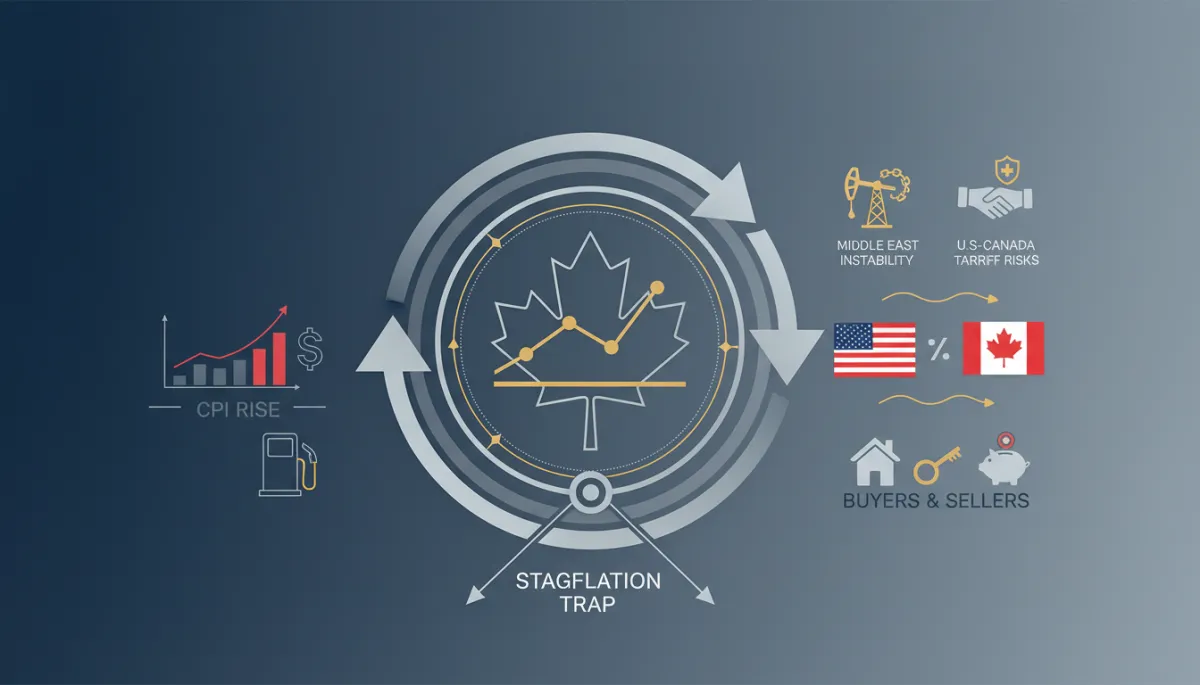
Stuck in the Stagflation Trap? What the Bank of Canada’s Rate Pause Means for GTA Buyers and Sellers
The Bank of Canada has now held its overnight rate at 2.25% for five consecutive decisions. For buyers and sellers across the Greater Toronto Area, that stability might look comforting on the surface—but the story behind it is more complicated, and far more important for your next move in real estate.
The Bank of Canada’s Recent Decisions: Five Straight Holds at 2.25%
On September 2, 2026, the Bank of Canada once again kept its target for the overnight rate at 2.25%, with the Bank Rate at 2.50% and the deposit rate at 2.20% (Bank of Canada). This marked the fifth consecutive announcement where policymakers chose to hold rather than hike or cut. For context, the overnight rate is the foundation of borrowing costs across the country—it directly influences variable mortgage rates, home equity lines of credit, and even how quickly your credit card debt can snowball if you’re not careful.
For households in the GTA—especially first-time buyers and owners of condos and townhomes—this steady 2.25% rate has created a kind of “pause” environment: not low enough to feel cheap, not high enough to force a correction. But the Bank’s decision is not about comfort. It’s about managing a delicate balance between slowing growth and stubborn inflation, a combination economists often call a potential stagflation trap.
Why the Bank Held the Rate: Avoiding the Stagflation Trap
Stagflation is the uncomfortable mix of sluggish economic growth and elevated inflation. Normally, central banks fight high inflation by raising rates, which cools spending and borrowing. But when the economy is already soft—job growth slowing, business investment cautious—hiking too aggressively risks tipping things into recession while prices are still high. That is the “stagflation trap”: raise rates and you hurt growth; cut rates and you risk even higher inflation.
The Bank of Canada’s five straight holds at 2.25% are best understood as an attempt to stay out of that trap. Policymakers see enough inflation pressure to avoid cutting, but enough economic fragility to hesitate on hiking. For real estate, that means we are living through a period where the Bank is deliberately choosing predictability over bold moves, hoping that time and moderating demand will bring inflation back to its 2% target without crushing growth or housing activity.
📌 Key Takeaway: The rate is on hold not because everything is fine, but because the Bank is walking a narrow path between weak growth and still‑elevated inflation—a classic stagflation risk.
The Inflation Picture: 2.8% CPI in April, Driven by Gasoline
Inflation is at the core of every rate decision. In April 2026, Canada’s Consumer Price Index (CPI) rose 2.8% year‑over‑year, up from 2.4% in March (Statistics Canada). On the surface, 2.8% is within the Bank of Canada’s 1–3% target band. But the story underneath matters: the main driver was a surge in energy prices, especially gasoline, up 28.6% year‑over‑year, and fuel oil and other fuels up more than 40% (Statistics Canada).
If you strip out gasoline, inflation was a more modest 2.0%, actually slower than the month before. That tells us two things:
Everyday essentials like food and shelter are rising, but more gradually—food from stores was up 3.8%, shelter 1.8%.
The headline inflation number is being pushed around by global energy shocks more than domestic overheating.
For GTA households, this shows up at the pump and on utility bills—but it also feeds into the cost of building materials, transportation of goods, and ultimately, the cost structure of new housing projects. The Bank of Canada knows it cannot control wars or oil markets. Raising rates won’t make gasoline cheaper. That’s another reason it is cautious about over‑tightening into what is partly an imported inflation shock.
Canada vs. the U.S.: When 2.8% Meets 4.2%
While Canada’s CPI sat at 2.8% in April, the United States saw inflation hit about 4.2% in May. That gap matters. A hotter U.S. inflation environment often leads the Federal Reserve to lean more aggressively toward higher rates. When the Fed moves faster than the Bank of Canada, it can push the Canadian dollar lower and the U.S. dollar higher, affecting everything from import prices to cross‑border investment flows.
For the Bank of Canada, this creates a difficult comparison:
If it matches U.S. hikes just to defend the currency, it risks over‑tightening at home where inflation is lower and growth is more fragile.
If it lags behind, a weaker Canadian dollar can make imports—especially energy and U.S. goods—more expensive, potentially re‑igniting inflation.
This Canada–U.S. divergence is one reason Governor Tiff Macklem has emphasized a cautious, data‑driven approach. The Bank is trying to avoid importing either a U.S.‑style inflation spike or an unnecessarily sharp slowdown. For GTA buyers and sellers, it means policy risk is no longer just domestic—what happens in Washington and on Wall Street increasingly shapes what happens to your mortgage rate in Toronto or Mississauga.

Careful rate planning helps GTA buyers stay competitive even when policy is uncertain.
Governor Tiff Macklem’s Commentary: Why His Words Matter for Real Estate
Beyond the rate itself, Governor Tiff Macklem’s commentary has become a crucial guidepost for markets. In his September 21, 2026 speech in Halifax—titled “Adapting to structural forces, navigating uncertainty”—Macklem highlighted how Canadian households and businesses are adjusting to trade tensions, high energy prices, and rapid technological change (Bank of Canada, 2026). His message for monetary policy was clear: the Bank is pursuing a “wait‑and‑see” approach, ready to respond if inflation stays sticky, but wary of choking off growth prematurely.
For real estate, this is significant in three ways:
Signals on future moves: Macklem has not ruled out rate hikes, especially if inflation re‑accelerates due to energy or trade shocks. That keeps an upward risk to borrowing costs on the table.
Recognition of structural headwinds: His focus on trade uncertainty and high energy prices shows the Bank understands that some inflation pressures are structural and global, not just domestic overheating. That supports the case for cautious, gradual moves rather than aggressive tightening.
Regional nuance: Macklem pointed out that some regions are less exposed to U.S. tariffs but more vulnerable to energy costs. For energy‑intensive households in the GTA’s older housing stock, that matters: rising heating and transportation costs squeeze budgets and affect how much mortgage payment you can truly afford.
💡 Pro Tip: When the Governor speaks, he is often hinting at where rates might go next. Serious buyers and sellers should pay attention—or work with professionals who do.
What Could Move Rates Next? Key Triggers to Watch
1. Middle East Instability and Energy Prices
Ongoing instability in the Middle East has already pushed global energy prices higher, contributing to that 19.2% jump in energy costs and the 28.6% surge in gasoline prices reported in April (Statistics Canada). If conflicts escalate or supply routes are disrupted, oil prices could rise further. That would likely:
Keep Canadian inflation elevated or push it higher, especially through gasoline and heating costs.
Force the Bank of Canada to consider future rate hikes, even if domestic growth is weak.
For GTA buyers, that’s a warning sign: if energy‑driven inflation persists, today’s 2.25% policy rate may not last forever. Locking in or at least understanding your exposure to rate changes becomes more important the more volatile the global backdrop becomes.
2. U.S.–Canada Tariff Risks and Trade Tensions
Macklem has also flagged escalating trade uncertainty with the United States as a major risk. If U.S.–Canada relations worsen and new tariffs are imposed, Canada could face a double hit:
Slower growth as exports are squeezed and business investment stalls.
Higher prices on imported goods, feeding into inflation despite weaker demand.
That is classic stagflation territory. Depending on how severe the tariffs are, the Bank could be forced to choose between supporting growth with lower rates or defending price stability with higher ones. Either path would ripple quickly into mortgage markets and housing sentiment in the GTA.
3. Domestic Growth, Jobs, and Housing Activity
Finally, the Bank of Canada is watching how households and businesses react to this environment. If consumer spending slows sharply, unemployment rises, or housing markets seize up, the case for rate cuts strengthens. If, instead, demand stays robust and inflation refuses to ease, the pressure for hikes builds. For now, Macklem’s tone suggests a willingness to wait and see how these forces play out before making a decisive move.
What This Means for GTA Buyers: Pre‑Approval and Readiness Are Non‑Negotiable
In a world of rate uncertainty, the most powerful tool a buyer can have is clarity. That starts with a solid, up‑to‑date mortgage pre‑approval. At Affordable Homes and Condos – Ali Bolourchi Real Estate (A.B.R.E.) Team, we see too many hopeful buyers relying on outdated assumptions about what they can afford, only to be surprised when lenders apply today’s stress tests and payment calculations to their file.
Here’s why pre‑approval is critical right now:
Rate holds: Many lenders will hold a rate for 60–120 days. In a period where future hikes are possible, securing today’s rate can protect you from payment shocks just as you’re ready to make an offer.
Budget realism: With inflation still elevated—especially on energy and food—pre‑approval helps you see what monthly payment fits your real life, not just a theoretical maximum.
Offer strength: In competitive segments of the GTA market, being fully pre‑approved signals to sellers that you are a serious, low‑risk buyer, which can make the difference in multiple‑offer situations.
💡 Pro Tip from A.B.R.E. Team: Get pre‑approved before you start serious home shopping, then refresh that approval if more than 60–90 days pass or if your financial situation changes.
Readiness in a Moving Market: How Buyers Can Stay One Step Ahead
With the Bank of Canada on hold but not on autopilot, buyers need to think in scenarios, not certainties. Being “ready” in this environment means:
Knowing your numbers: Understand your maximum purchase price, but also your comfortable price range if rates were to rise by 0.5–1.0 percentage points during your term.
Choosing the right product: Variable rates move more directly with the overnight rate, while fixed rates are tied to bond markets and expectations. Each has pros and cons in a stagflation‑risk environment, and the right choice depends on your income stability and risk tolerance.
Building a buffer: With CPI at 2.8% and energy costs volatile, leave room in your budget for higher utilities, condo fees, and everyday expenses.
The A.B.R.E. Team specializes in helping first‑time buyers and affordability‑focused clients in the GTA model these scenarios, so you can search with confidence instead of anxiety. Our digital tools and local expertise work together to show you exactly how a property fits into your financial life today—and how resilient it is to tomorrow’s rate changes.
Strategic Pricing for Sellers: Navigating Rate Uncertainty with Confidence
Sellers are just as exposed to rate uncertainty as buyers. When the Bank of Canada holds at 2.25% but hints at possible future moves, buyers become more cautious. They scrutinize monthly payments, hesitate on stretch offers, and sometimes wait on the sidelines “to see what happens.” That makes strategic pricing essential if you want to attract serious offers quickly and avoid prolonged time on market.
In this environment, smart pricing means:
Aligning with buyer affordability: With inflation still eating into disposable income, there is less room for buyers to stretch. Pricing realistically—based on recent comparable sales and current lending conditions—keeps your listing in the “yes” pile instead of the “maybe later” pile.
Accounting for rate scenarios: If markets start to price in future hikes due to Middle East instability or U.S.–Canada tariff risks, buyer sentiment can shift quickly. The A.B.R.E. Team monitors these signals and helps you adjust strategy—whether that means a sharper initial list price, targeted incentives, or timing your listing to key Bank of Canada announcements.
Leveraging digital visibility: In a cautious market, you can’t rely on a “For Sale” sign alone. High‑quality digital marketing, accurate pricing, and clear communication about carrying costs and condo fees help your property stand out to budget‑conscious, rate‑sensitive buyers.
Turning Uncertainty into Strategy with the A.B.R.E. Team
The Bank of Canada’s decision to hold the overnight rate at 2.25% for five straight periods is not just a technical policy move. It is a reflection of a world where stagflation risks, global conflicts, and trade tensions are all in play. Inflation at 2.8% in April—driven largely by gasoline—versus 4.2% in the U.S. shows that Canada is walking a different, but equally narrow, path. Governor Tiff Macklem’s cautious commentary underscores that there is no simple roadmap ahead.
For buyers and sellers in the Greater Toronto Area, the key is not to wait passively for certainty. It is to act strategically in uncertainty:
Buyers: secure pre‑approval, understand your payment comfort zone, and be ready to move when the right affordable home or condo appears.
Sellers: embrace strategic pricing, align with real buyer budgets, and use data‑driven marketing to position your property effectively.
At Affordable Homes and Condos – Ali Bolourchi Real Estate (A.B.R.E.) Team, our mission is to bring transparency, client empowerment, and digital innovation to every transaction. We track Bank of Canada decisions, inflation data, and global triggers so you don’t have to—and then translate that information into clear, practical guidance tailored to your budget and goals in the GTA market.
Ready to take the next step? Start by taking our free First‑Time Home Buyer Eligibility Quiz, browse our curated list of affordable homes and condos, or download our complimentary buyer’s and seller’s guides. When you’re ready for personalized advice, the A.B.R.E. Team is here to help you navigate today’s rate uncertainty with confidence.